
At Studio 36 Digital, our team set out to understand one crucial reality shaping SEO today: how do UK users actually experience Google search results in 2025?
The findings were significant. After analysing 1,000 high-volume keywords across 22 major industries, representing over 404 million monthly searches. We discovered that 98.7% of UK Google searches now display one or more enhanced SERP features.
In practical terms, this means almost no one in the UK sees a traditional list of ten blue links anymore. Google’s search pages are now AI-driven, multimedia experiences that deliver answers directly, often without a single website click.
Table of Contents
All SERP data was collected from the Ahrefs API (UK database) in October 2025. We used Ahrefs to identify and verify the presence of 20+ SERP features for each keyword, including AI Overviews, People Also Ask boxes, Local Packs, image and video carousels, sitelinks, and paid results.
We used a stratified sampling method to ensure a balanced mix of informational, commercial, and local intent queries. Each keyword’s SERP snapshot was analysed for feature presence and overlap, providing a clear view of the average UK search experience.
All findings were based on live Ahrefs SERP data, not estimates. Our team manually verified a subset of keywords to confirm accuracy and feature classification.
| Metric | Finding |
|---|---|
| Searches with at least one SERP feature | 98.7% |
| Searches with only pure organic results | 1.3% |
| “People Also Ask” question boxes | 74.8% |
| AI-generated overviews | 19.4% |
| Image thumbnails | 50.3% |
| Video thumbnails | 14.5% |
| Sitelinks | 84.2% |
| Average number of features per search | 3.49 |
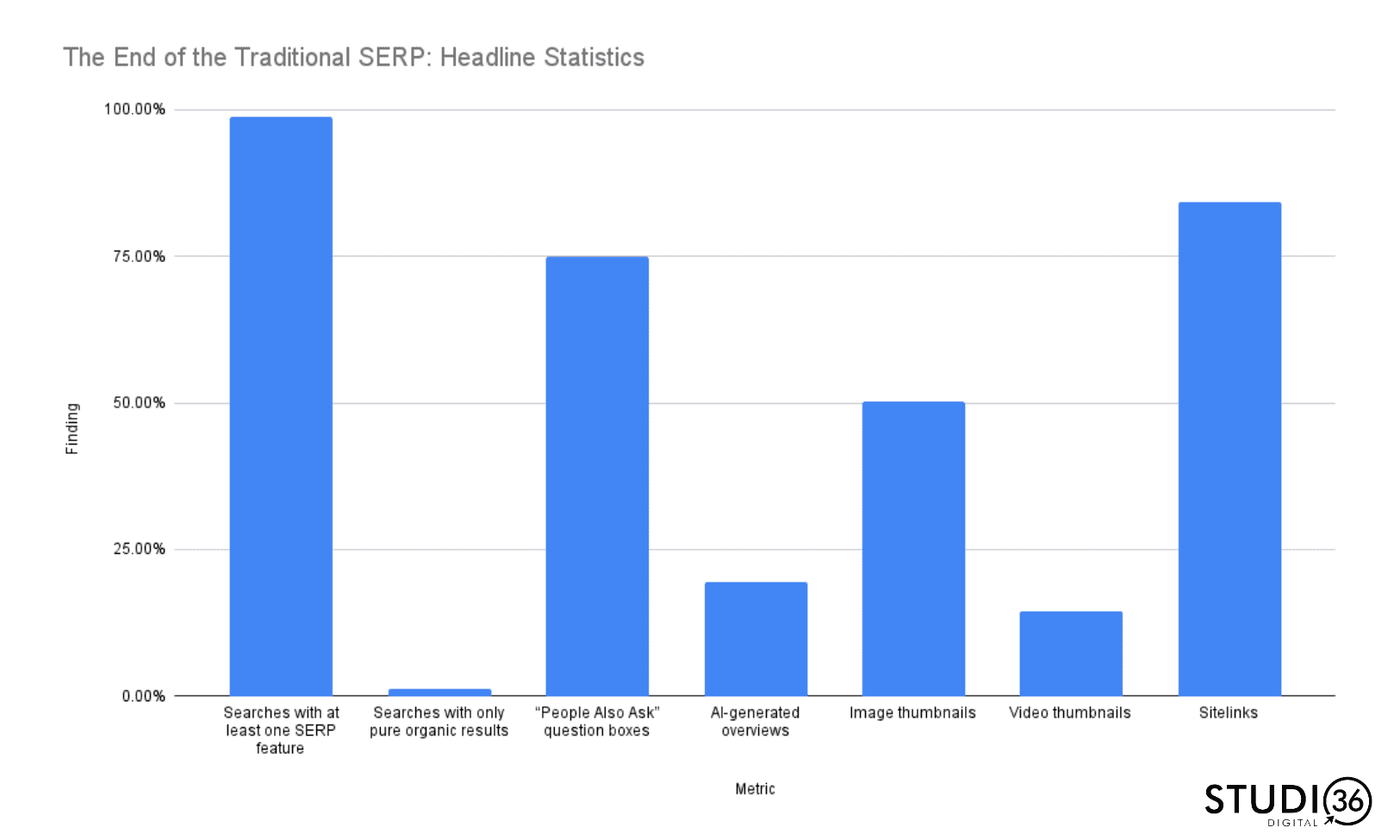
The conclusion: Google’s traditional search model, the simple “10 blue links”, has been replaced by an AI-enhanced, feature-rich ecosystem.
Users no longer scroll through pages of links. Instead, they engage with visual, interactive, and AI-summarised answers inside the search results themselves.
When a UK user performs a Google search in 2025, this is what they typically see before any organic result appears:
Our analysis shows the average UK search page includes between three and four different features. For 11% of keywords, six or more features appear at once, creating what we call “SERP crowding”, where traditional results are buried under layers of interactive content.
The most transformative feature on Google in 2025 is the AI Overview, which now appears in nearly one in five UK searches.
These summaries are generated by Google’s generative AI systems and display concise, authoritative answers at the very top of search results, often pushing organic results below the fold.
| Industry | % of Keywords with AI Overview |
|---|---|
| Health & Medical | 75% |
| Digital Marketing & SEO | 65% |
| Fitness & Wellness | 40% |
| Education & Careers | 30% |
| Legal Services | 20% |
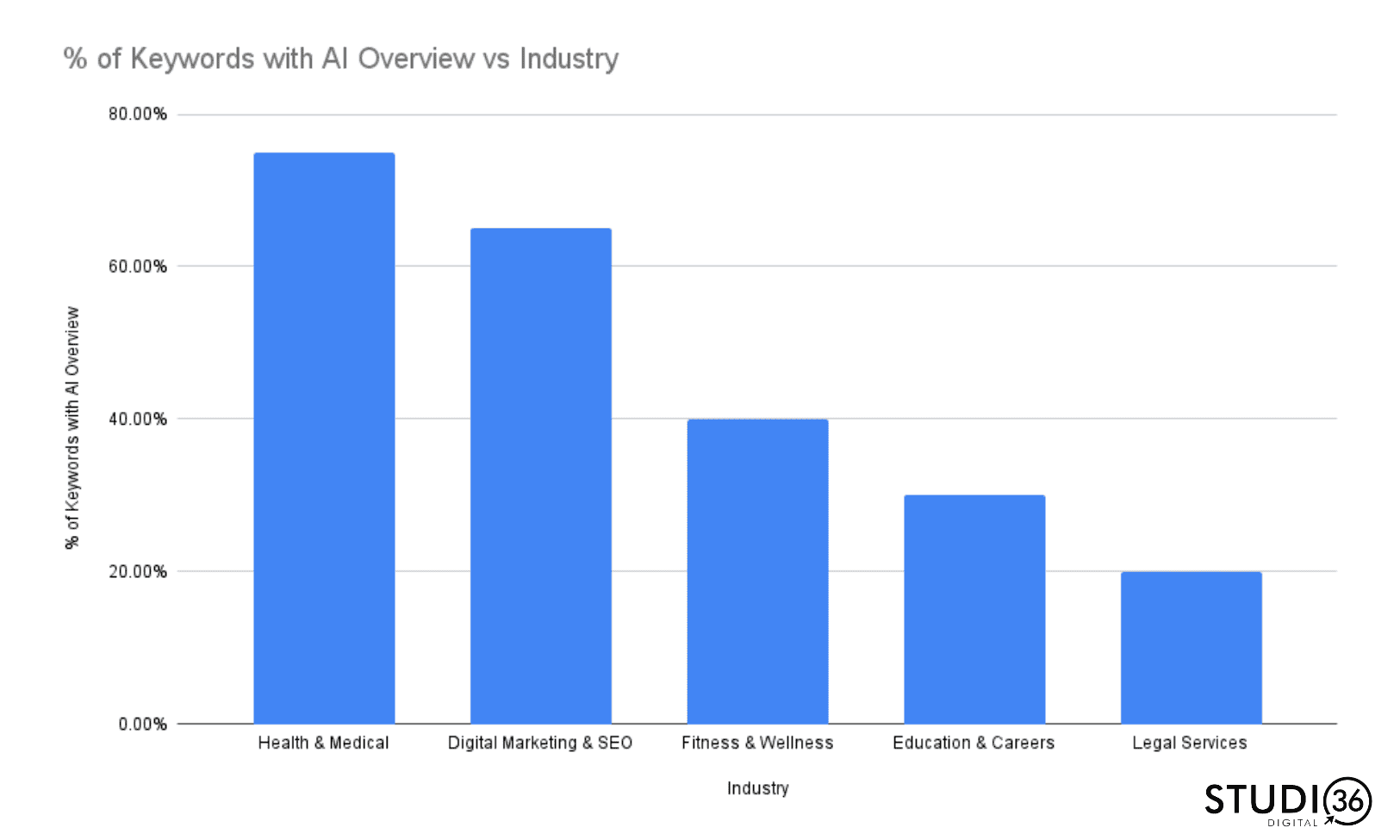
This shift has significant implications. For informational queries, such as “What is SEO?”, “Diabetes symptoms”, or “How to lose weight”, Google now presents AI-generated answers that summarise insights from multiple sites.
In effect, Google’s AI has become the first point of contact between businesses and users. To appear within these summaries, brands must publish clear, well-structured, trustworthy, and expert-led content that AI systems can confidently extract and reference.
Next to sitelinks, “People Also Ask” (PAA) is the most prevalent SERP feature. Our study found that three out of every four searches (74.8%) display at least one question box, and in some industries, such as health and law, coverage is effectively 100%.
Each PAA box typically contains 4–6 related questions, though interaction often reveals 20 or more additional queries.
This transforms Google into an infinite Q&A interface, where users can continue exploring related questions without ever visiting an external site.
| Category | PAA Presence |
|---|---|
| Health & Medical | 100% |
| Legal Services | 100% |
| Finance & Insurance | 80% |
| Education & Learning | 75% |
| Local Services | 70% |
| Technology | 65% |
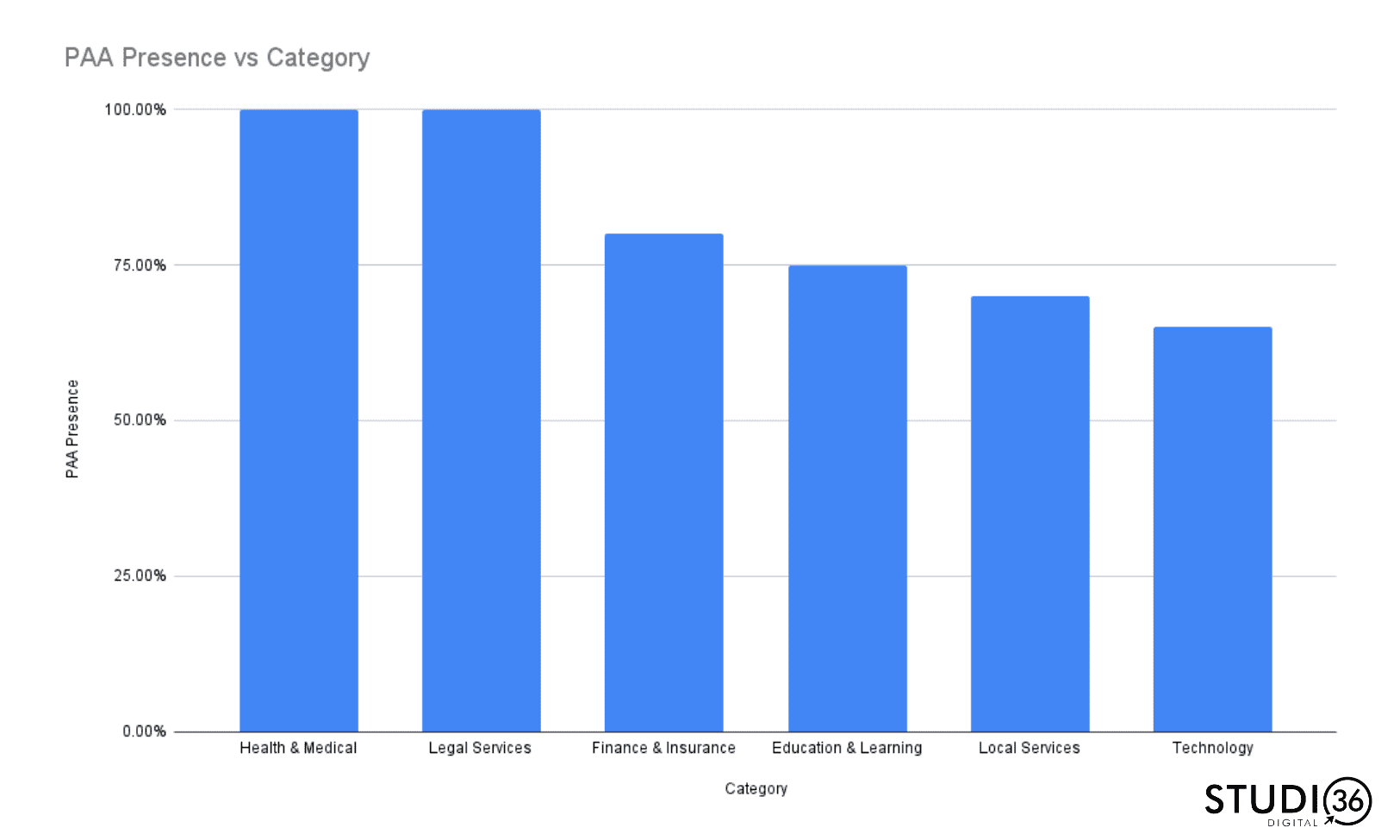
Implication for SEO: Websites must target question-based search intent directly. Using structured FAQs, conversational subheadings, and schema markup helps content qualify for both PAA and Featured Snippet appearances, two of the most valuable organic placements still driving clicks.
Visual content is now a defining characteristic of search visibility. Our data shows:
This reflects a major shift toward visual discovery, especially in consumer and lifestyle categories.
| Category | Image Presence | Video Presence |
|---|---|---|
| Recipes & Cooking | 90% | 50% |
| Home & DIY | 85% | 30% |
| Fashion & Beauty | 85% | 25% |
| Technology Products | 90% | 45% |
| Fitness & Exercise | 80% | 35% |
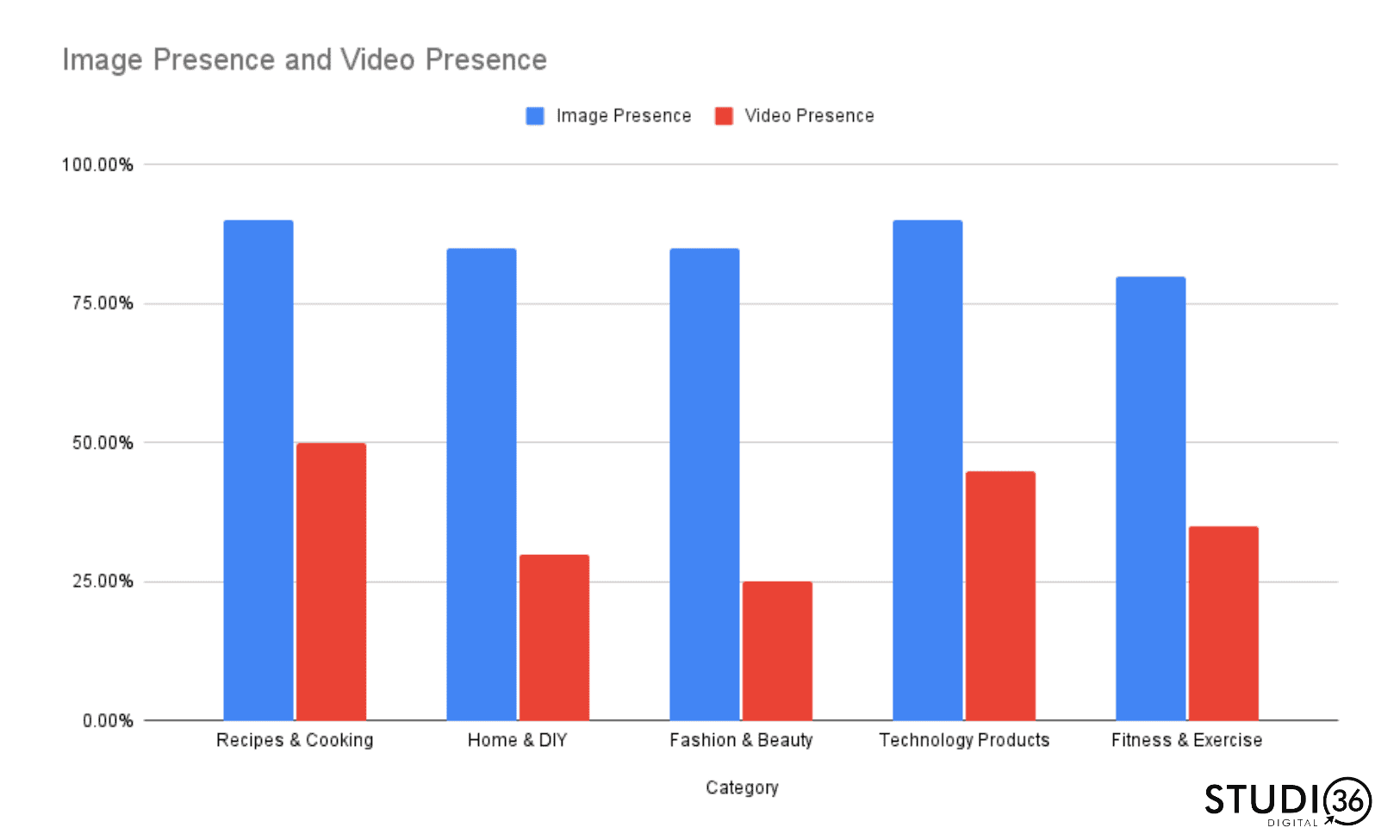
For businesses, this means visual SEO is no longer optional.
High-quality images, product galleries, and video content are essential assets for appearing in carousels and thumbnails.
Optimisation steps include:
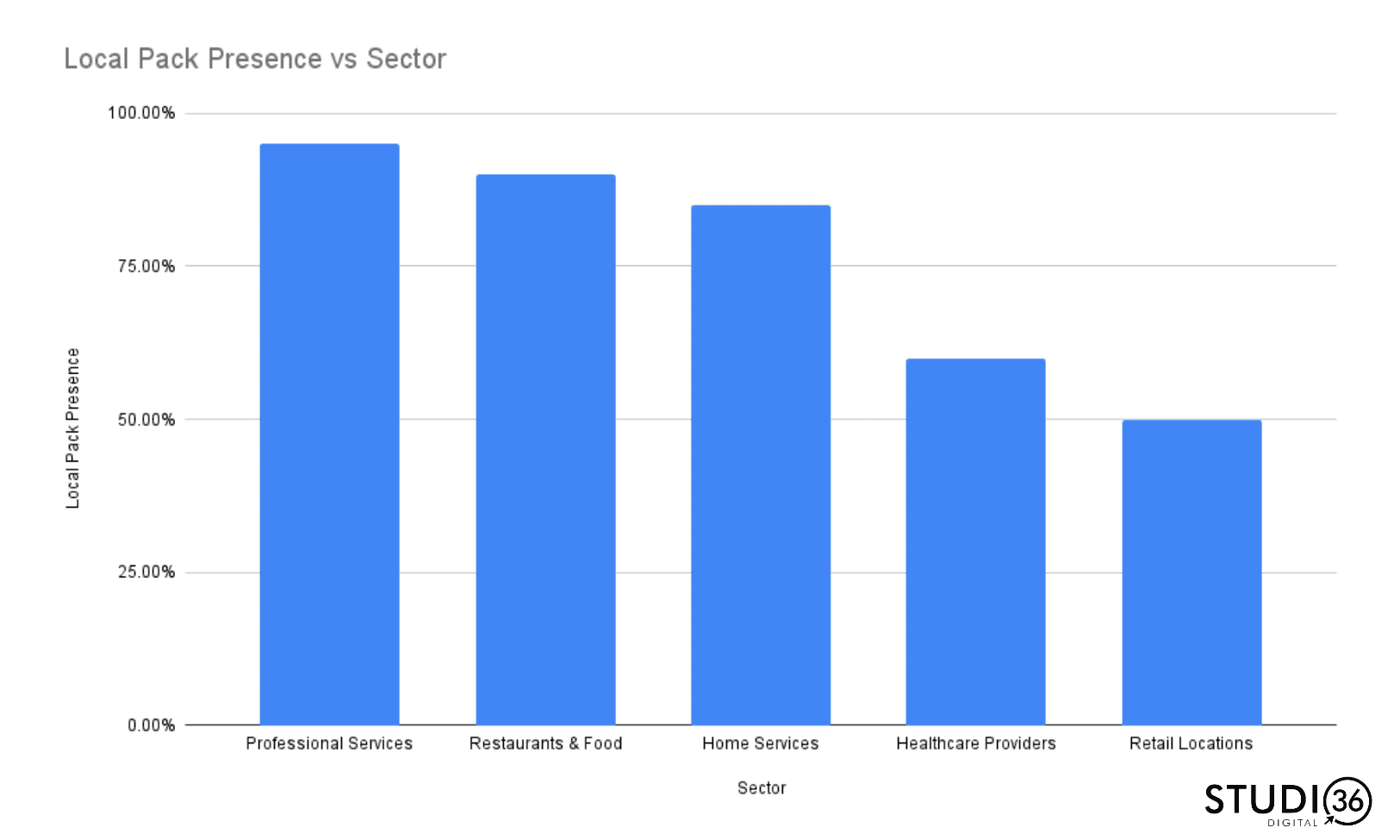
For UK service-based businesses, Google’s Local Pack has become the key battleground.
Our study found that 29.7% of all UK searches trigger a Local Pack, and in service categories like plumbing, legal, or hospitality, the percentage rises above 90%.
Each Local Pack displays only three businesses. If your brand is not in that top three, you are effectively invisible, especially on mobile, where Local Packs occupy the entire above-the-fold view.
| Sector | Local Pack Presence |
|---|---|
| Professional Services | 95% |
| Restaurants & Food | 90% |
| Home Services | 85% |
| Healthcare Providers | 60% |
| Retail Locations | 50% |
To succeed locally, brands must prioritise:
The takeaway: local SEO is now a “winner-takes-all” game. Ranking fourth is as invisible as ranking fortieth.
Our study reveals that 11.6% of all searches now include organic shopping results integrated directly into the SERP.
In e-commerce categories, especially tech and fashion, this number skyrockets.
| Category | Shopping Feature Presence |
|---|---|
| Tech Products | 85% |
| Fitness Equipment | 70% |
| Home Goods | 60% |
| Fashion & Accessories | 50% |
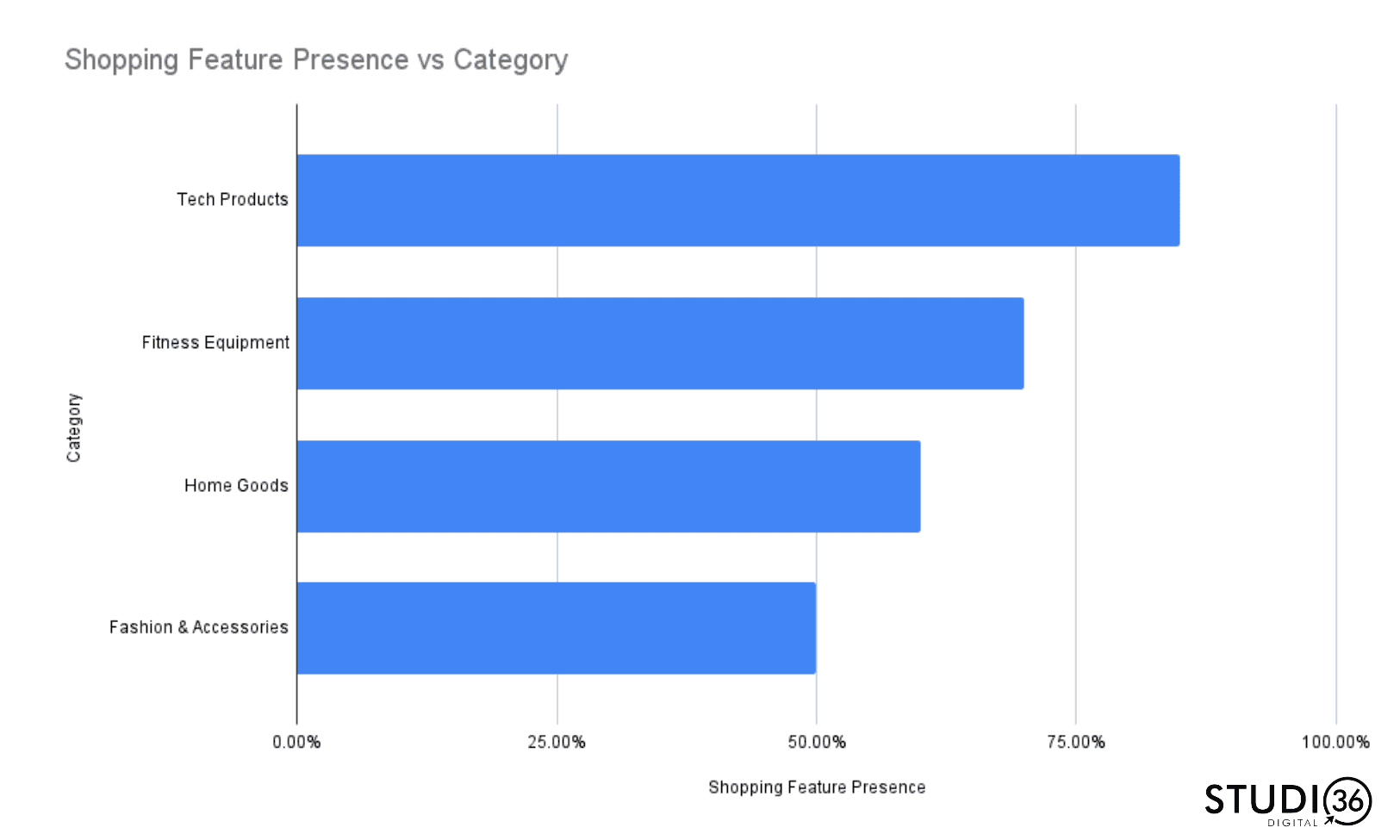
Product searches now display carousels of items, reviews, and prices, often before any organic listing.
This has effectively turned Google into a hybrid marketplace, where users can browse and compare without leaving the platform.
E-commerce brands should now focus on product schema, image optimisation, and review visibility to maintain presence in these high-intent searches.
Across every industry we analysed, one trend was consistent: fewer clicks are reaching websites.
SERP features like AI Overviews, PAA boxes, Local Packs, and Featured Snippets now answer user intent directly. Being the source those answers draw on is the aim of generative engine optimisation.
Many searches no longer result in any website visit at all—creating what’s known as the “zero-click” crisis.
| Query Type | Estimated CTR to Organic |
|---|---|
| AI Overview Queries | 15–25% |
| PAA-Dominated Queries | 25–35% |
| Local Pack Queries (Top 3) | 40–50% |
| High-Competition Queries | 30–40% |
| Clean Navigational Queries | 70–85% |
This shift demands that SEO measurement evolves.
Instead of focusing solely on organic clicks, brands must now measure SERP impressions, brand mentions, and feature visibility as key performance metrics.
The message from our data is clear: traditional SEO alone is no longer enough.
To stay visible in 2025 and beyond, UK businesses must diversify their search presence and optimise for the features that dominate their sector.
Based on current growth trajectories, we forecast the following within the next 12 months:
Google’s transformation into an answer and discovery engine will continue, making multi-feature SEO strategies the new standard for visibility.
Our 2025 UK SERP Study confirms what many SEO professionals have felt but not yet quantified: The traditional search result is dead.
With 98.7% of searches now showing enhanced results and AI-driven summaries shaping user journeys, success depends not on where you rank, but on where, and how, you appear.
At Studio 36 Digital, we see this evolution as both a challenge and an opportunity. Brands that understand their SERP environments, invest in trusted content, and embrace visual, local, and AI-ready strategies will thrive.
Those who rely on yesterday’s SEO tactics risk being lost beneath layers of AI summaries, carousels, and question boxes.
Search has changed forever, and adaptation is no longer optional.

Get practical SEO and digital marketing tips that help your business win more customers from Google - straight to your inbox, no jargon.
By subscribing you agree to receive marketing emails from Studio 36 Digital. Unsubscribe any time. See our Privacy Policy.